Free Sensory Starter Kit
Find Out Which Senses Your Child Seeks and Which Ones They Avoid
Do the meltdowns seem to come with no rhyme or reason?
This free 12-page kit comes from the book Sensory Processing 101. It has one cheat sheet for each sense, and one simple thing to try for each.
It is free. We will email it to you.
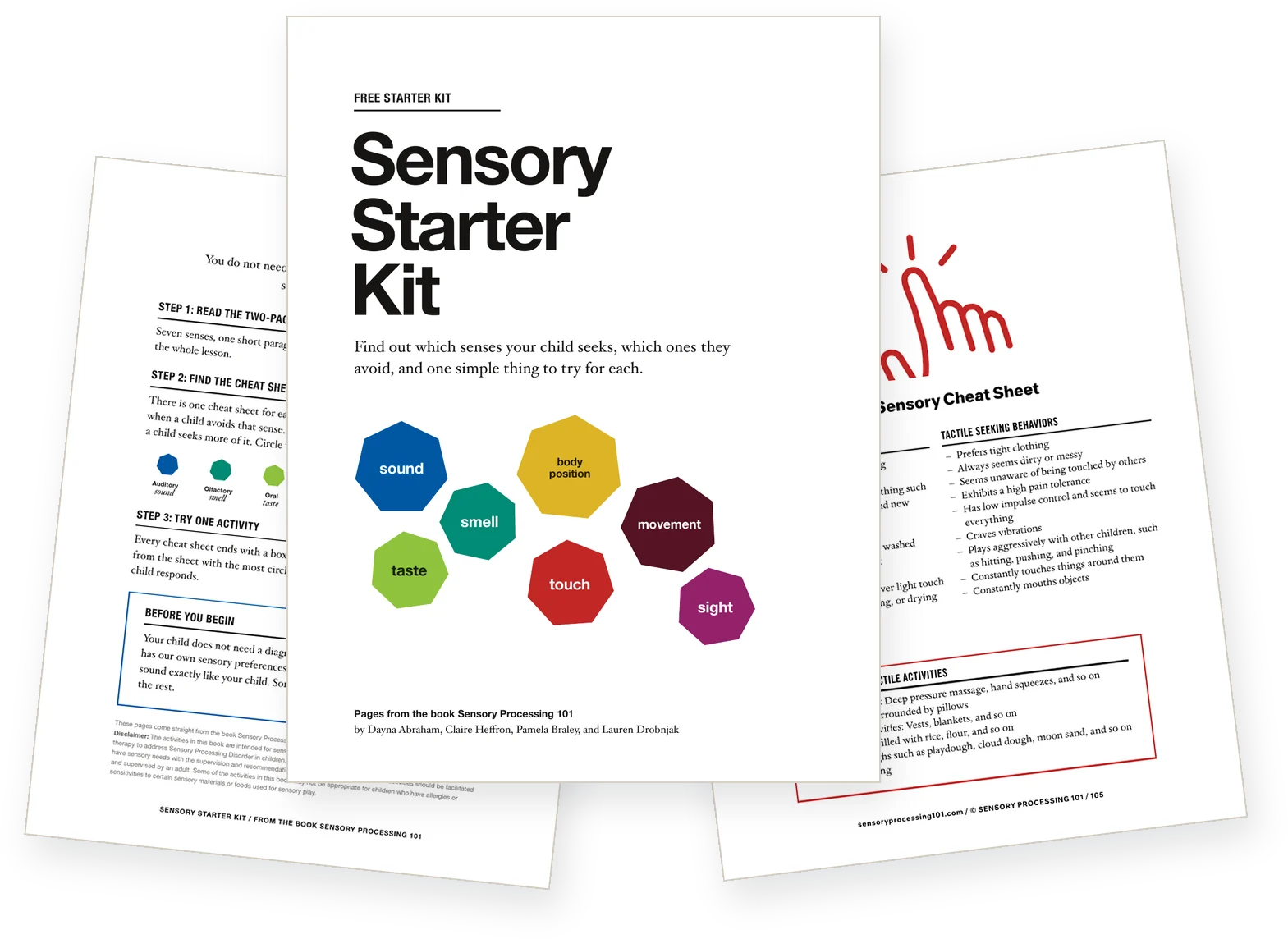
The seven senses, in plain words
- sound
- smell
- taste
- body position
- touch
- movement
- sight
What Is in the Kit
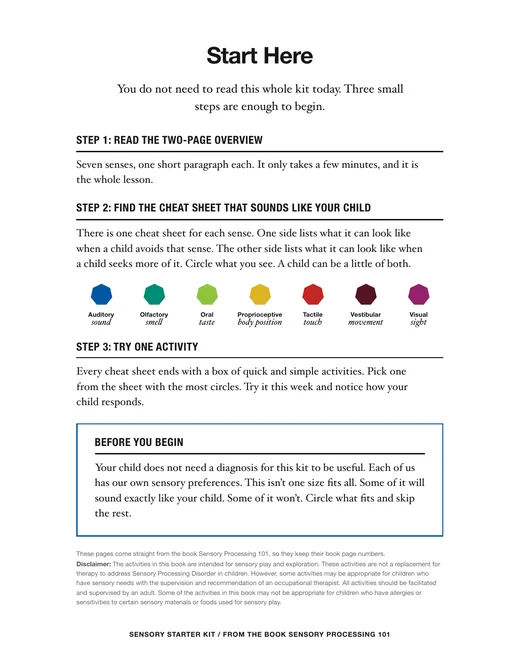
A Start Here page
One page that tells you what to do first. Three small steps, so you are not left wondering where to begin.
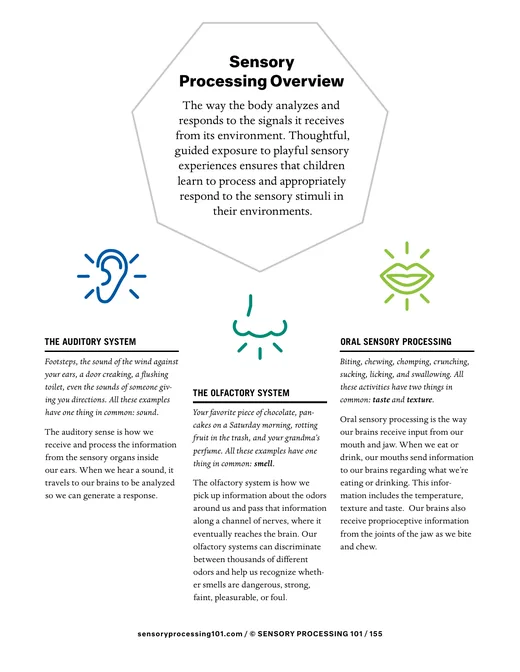
The seven senses on two pages
One short paragraph for each sense, with everyday examples. It only takes a few minutes to read.
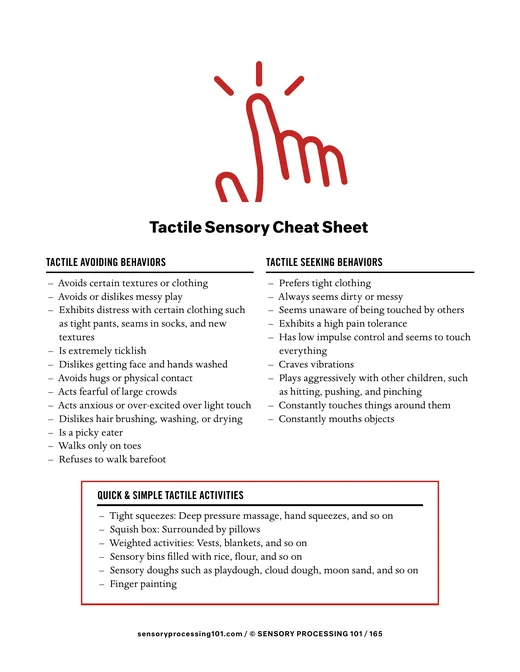
Seven cheat sheets, one for each sense
Each sheet lists what it can look like when a child avoids that sense and what it can look like when a child seeks more of it. Each one ends with a box of quick and simple activities to try.
This kit is not a diagnosis, and it is not a replacement for therapy. It is not a course to finish, either. Your child does not need a diagnosis for it to be useful.
Who wrote it
“I am not a therapist or a doctor. I am a mom raising a child who has sensory needs. I am an educator who taught in the early childhood field for 12 years. I am simply just like you.”
Dayna wrote the book with three pediatric therapists: Claire Heffron, Pamela Braley and Lauren Drobnjak. Every page in this kit comes straight from it.
“What a practical, reassuring, visually appealing, lovely book!”
Three Small Steps
- 1
Get the kit
Tell us where to send it and it will be in your inbox in a few minutes.
- 2
Circle what you see
Go through the cheat sheets and circle what sounds like your child.
- 3
Try one activity
Pick one from the sheet with the most circles and try it this week.